Zones are matched to your account. Trees that won't survive your winter are dimmed — flip the toggle to see the whole continent's worth.
The trees, by region
| Tree | Zones | Region | Good for | Notes |
|---|---|---|---|---|
 Sugar & red maple |
3–8 | Eastern | Shade, syrup, and blazing fall color | A true landscape workhorse. |
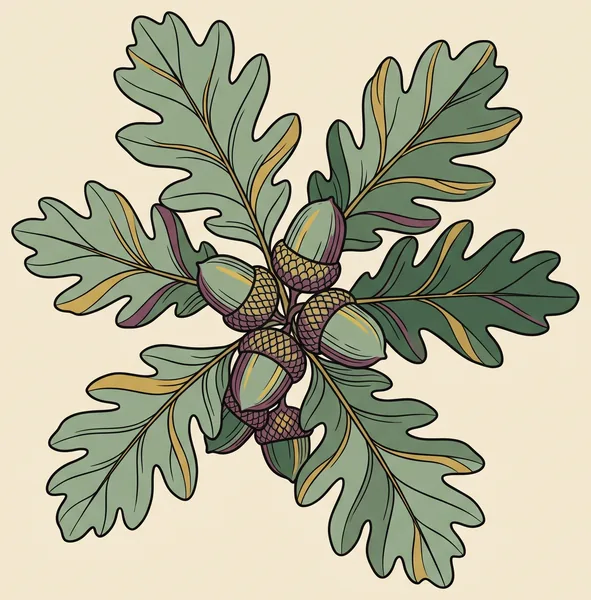
 Oak |
3–9 | Widespread | Acorns feed nearly everything — the keystone wildlife tree | Slow but generational; plant it for your grandkids. |
 American beech |
3–9 | Eastern | Smooth gray bark; beechnuts feed wildlife | Beech leaf disease is spreading — watch for banded leaves. |
 American elm |
2–9 | Eastern | The classic arching street-shade tree | Dutch elm disease — plant resistant cultivars only. |
 Slippery elm |
3–9 | Eastern | Inner bark is a traditional soothing remedy | Harvest bark in patches — girdling the trunk kills the tree. |
 Basswood (linden) |
2–8 | Eastern | Fragrant, bee-covered flowers; soft carving wood | Edible young leaves and a superb pollinator tree. |
 Black cherry |
3–9 | Eastern | Wildlife fruit and prized furniture wood | Wilted leaves and twigs are toxic to livestock (cyanide). |
 Black walnut |
4–9 | Eastern | Prized dark timber and edible nuts | Roots release juglone — toxic to tomatoes and many garden plants nearby. |
 Hickory (shagbark) |
4–8 | Eastern | Edible nuts and tough, shock-resistant wood | Big taproot — transplant only when very young. |
 Hackberry |
2–9 | Central | A tough, adaptable urban tree; berries feed birds | Shrugs off poor soil and city conditions; underrated. |
 Sweetgum |
5–9 | Eastern | Star-shaped leaves and brilliant fall color | The spiky "gumball" seed pods are a real cleanup chore. |
 Sassafras |
4–9 | Eastern | Mitten-shaped leaves; aromatic; fiery fall color | Root beer's old flavor — but safrole is now known to be unsafe internally. |
 Witch hazel |
3–8 | Eastern | Late-fall spidery flowers; the classic skin astringent | A shade-loving understory tree — blooms when nothing else does. |
 Eastern redbud |
4–9 | Eastern | Pink spring bloom right along the bare branches | Edible flowers; a small, easy ornamental. |
 American holly |
5–9 | Eastern | Evergreen with red winter berries for the birds | Berries are toxic to people; needs a male and female to fruit. |
 Mulberry |
4–9 | Widespread | Heavy sweet fruit and fast shade | Fruit stains everything below it; can seed around weedily. |
 American persimmon |
4–9 | Eastern | Sweet fruit after frost; a wildlife magnet | Mouth-puckering until dead-ripe; usually needs male + female. |
 Willow |
2–9 | Wetlands | Fast, water-loving; erosion control and early bee forage | Aggressive roots — keep it far from pipes, drains, and septic. |
 Cottonwood |
2–9 | Wetlands | Very fast shade along rivers and ponds | Weak wood, thirsty roots, and a cottony seed mess in June. |
 Paper birch |
2–7 | Northern | Peeling chalk-white bark; a fast pioneer | Short-lived, and prone to bronze birch borer in warm zones. |
 Quaking aspen |
1–7 | Northern | Fast clonal pioneer; shimmering gold in fall | Suckers aggressively — not for a small tidy yard. |
 Eastern white pine |
3–8 | Northeastern | Fast soft-needled shade and timber; wildlife cover | Watch for white pine blister rust in humid areas. |
 Eastern hemlock |
3–7 | Northeastern | Shade-tolerant evergreen; dense shelter for wildlife | Threatened by hemlock woolly adelgid — inspect for the white pest. |
 Balsam fir |
3–6 | Northern | The fragrant classic Christmas tree; very cold-hardy | Struggles and short-lived in warm-summer regions. |
 Spruce |
2–7 | Northern | Windbreaks, timber, and year-round wildlife cover | Prefers cool climates; suffers in heat and humidity. |
 Tamarack (larch) |
2–5 | Northern bogs | A deciduous conifer — needles turn gold and drop each fall | Wants consistently moist, acidic ground. |
 Northern white cedar (arborvitae) |
2–7 | Northern | Hedges, screens, and windbreaks | Deer browse it hard — protect young trees through winter. |
 Bald cypress |
4–10 | Southeastern | A wet-site champion with "knees"; feathery and deciduous | Thrives in standing water yet handles ordinary yards too. |
 Live oak |
7–10 | Southern | Massive spreading evergreen oak; utterly iconic | Give it room — a true multi-generation heritage tree. |
 Southern magnolia |
6–10 | Southern | Glossy evergreen with huge, fragrant white flowers | Dense shade and steady leaf drop make a bare patch beneath. |
 Longleaf / southern yellow pine |
7–10 | Southern | Timber, pine straw, and a fire-adapted ecosystem | Needs periodic fire or thinning to truly thrive. |
 Cabbage palmetto |
8–11 | Coastal South | Salt- and storm-tough coastal palm | Cold-limited — a genuinely warm-climate tree. |
 Yaupon holly |
7–10 | Southern | A native holly — its leaves make the only caffeinated native tea | Only the leaves are used; the red berries are toxic. |
 Ponderosa pine |
3–7 | Western | Big timber pine; puzzle-piece bark that smells of vanilla | Drought-tough once its deep roots are established. |
 Lodgepole pine |
4–8 | Mountain | Straight and slender; fire-adapted (heat-opened cones) | Vulnerable to bark beetle in stressed, crowded stands. |
 Pinyon pine |
5–8 | Southwest | Edible pine nuts; slow, tough, and very drought-hardy | Very slow-growing — but the nuts are worth the wait. |
 Western juniper |
4–9 | Western | Drought-tough; berry-cones for wildlife (and gin's flavor) | Can spread into and take over open rangeland. |
 Manzanita |
7–10 | Western | Sculptural red bark, early bee flowers, edible berries | A shrub-tree built for dry, lean, rocky soil. |
 Mesquite |
6–11 | Desert Southwest | Edible pods (mesquite flour); nitrogen-fixer; fine dappled shade | Thorny, with deep aggressive roots that chase water. |
 Palo verde |
8–11 | Desert Southwest | Green photosynthetic bark; gold spring bloom; light shade | Arizona's state tree; branches are brittle in wind. |
 Desert willow |
7–11 | Desert Southwest | Trumpet flowers that hummingbirds love — and not a true willow | Extremely drought-tolerant once established. |
 Creosote bush |
7–11 | Desert Southwest | The scent of desert rain; ancient and tough | A defining desert shrub, not a tree; folk medicinal use is cautioned against. |
Hover any illustration for a closer look. Pair this with the perennial & fruit and native plants guides to build a whole zone-matched landscape.
Trees to know apart: safe vs. toxic look-alikes
A · Edible Pine vs. YewDEADLY
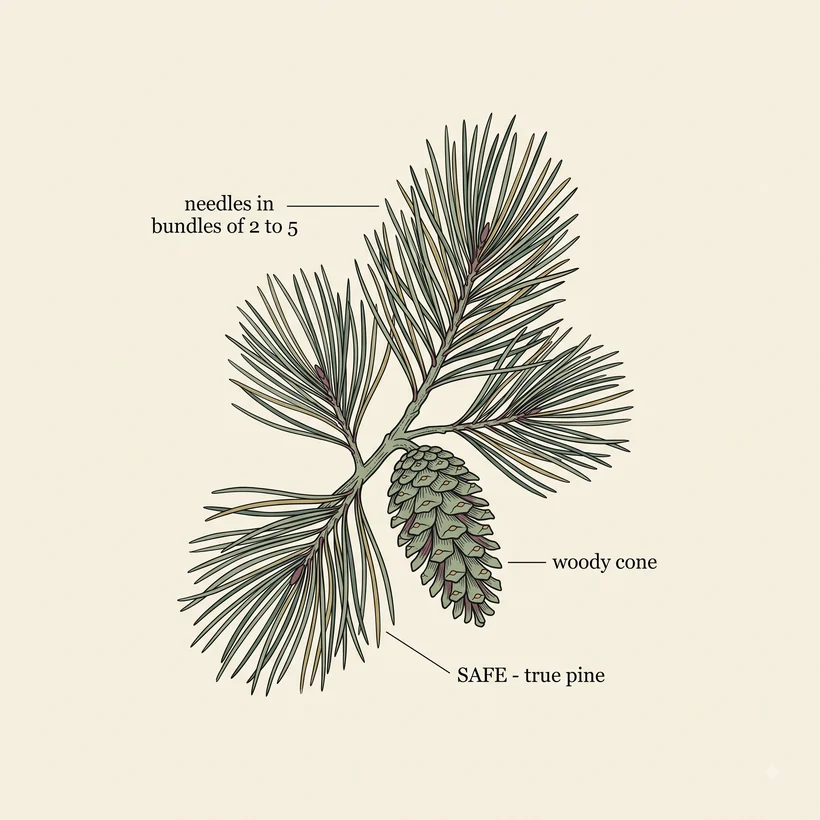
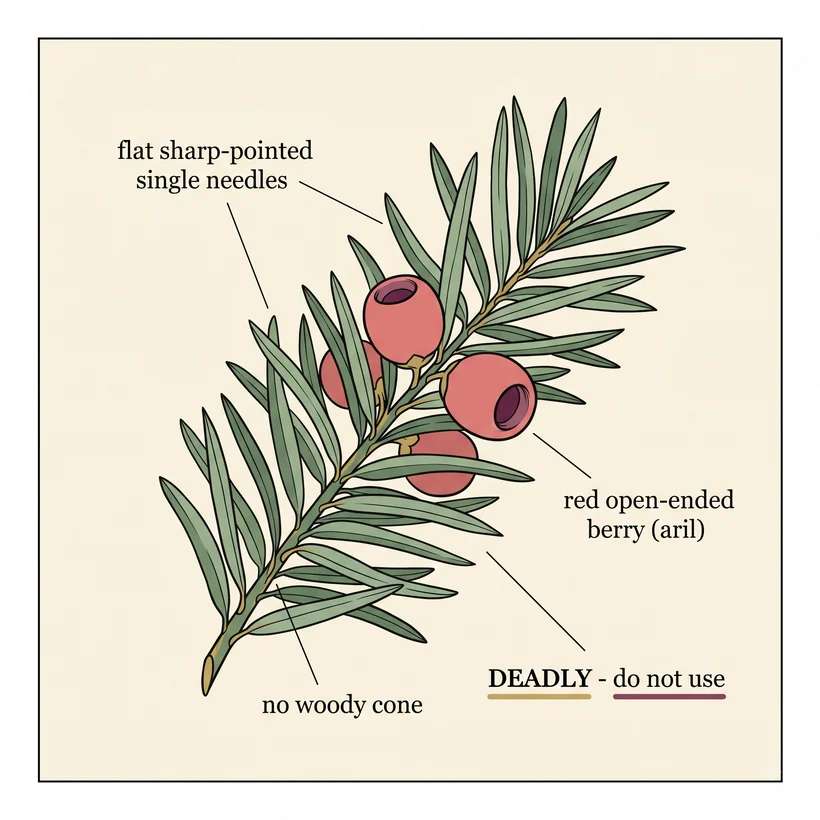
The tell: Never brew needle tea from an unconfirmed conifer — bundled needles plus a woody cone means pine.
B · Edible Juniper vs. Savin JuniperTOXIC
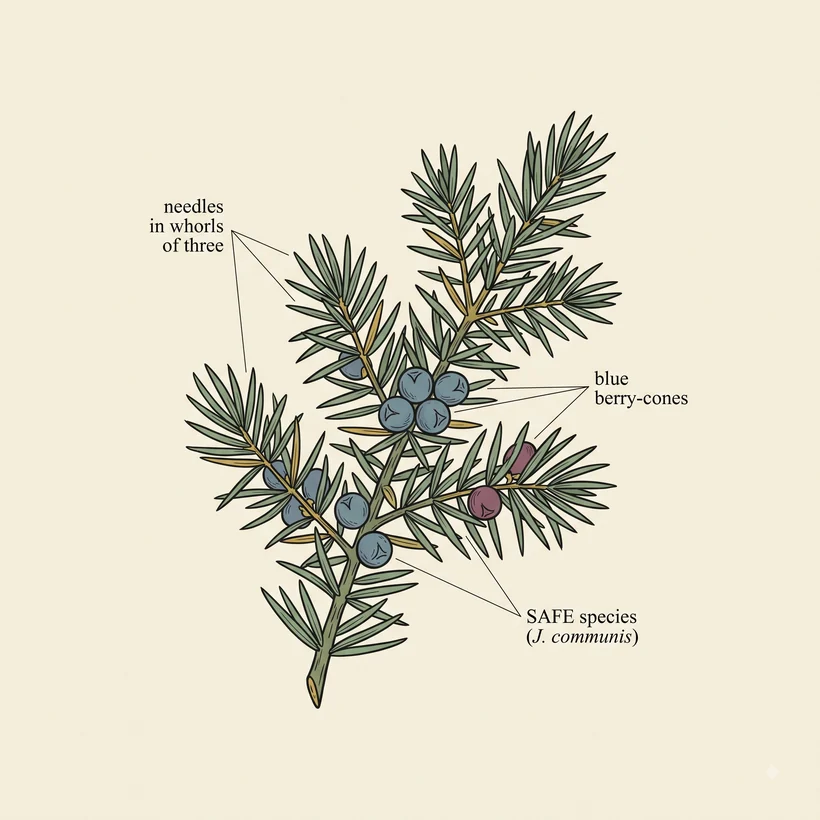
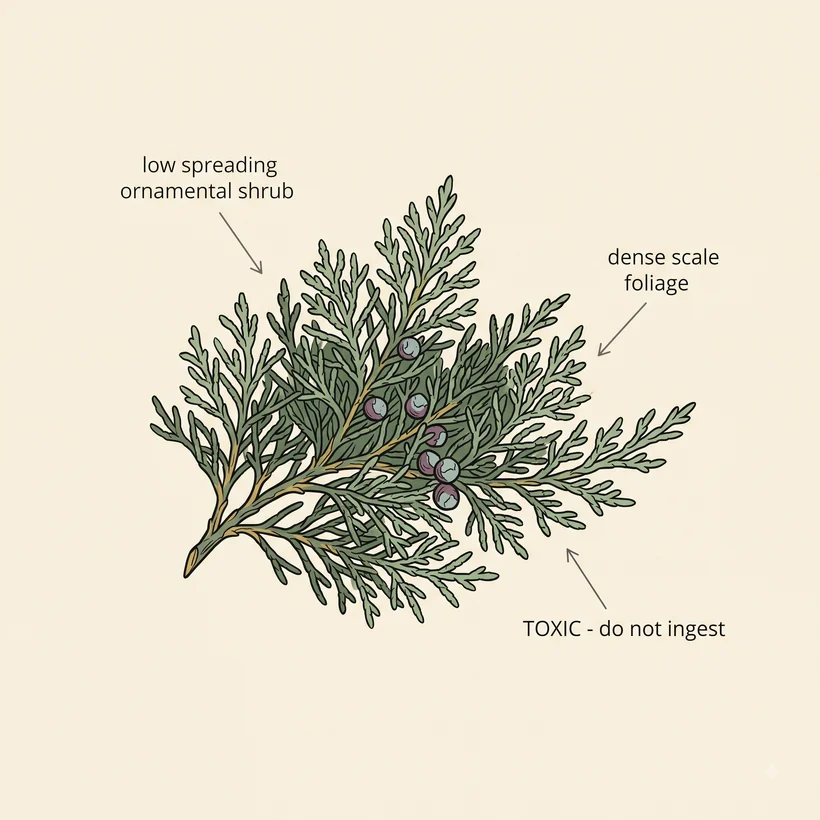
The tell: Take foliage and tips only from common juniper — never from the spreading ornamental kind in yards.
C · Yaupon vs. American HollyTOXIC
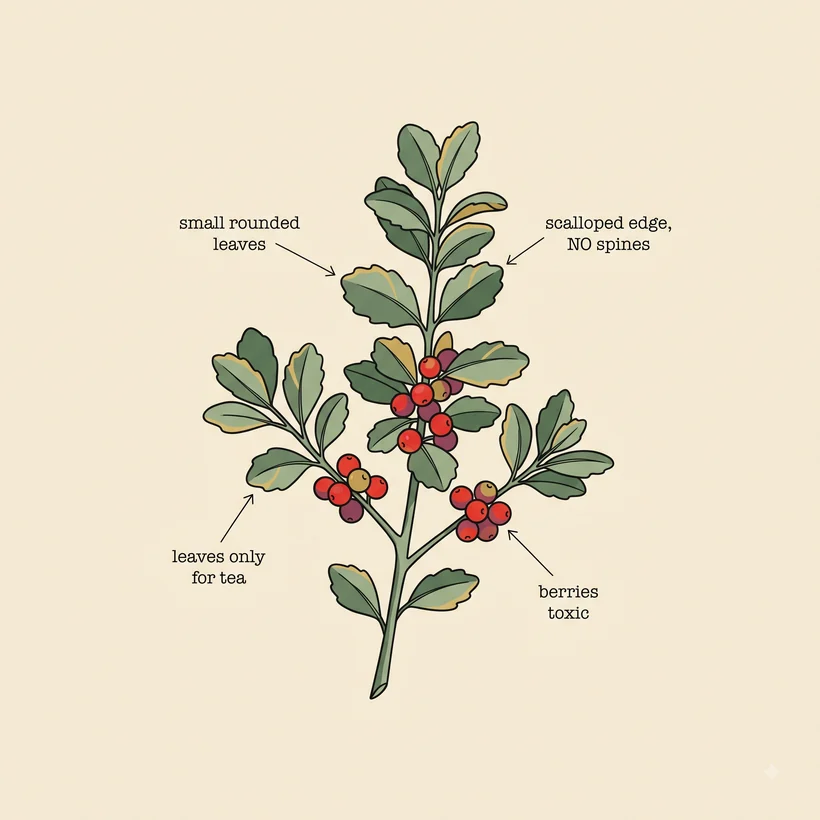
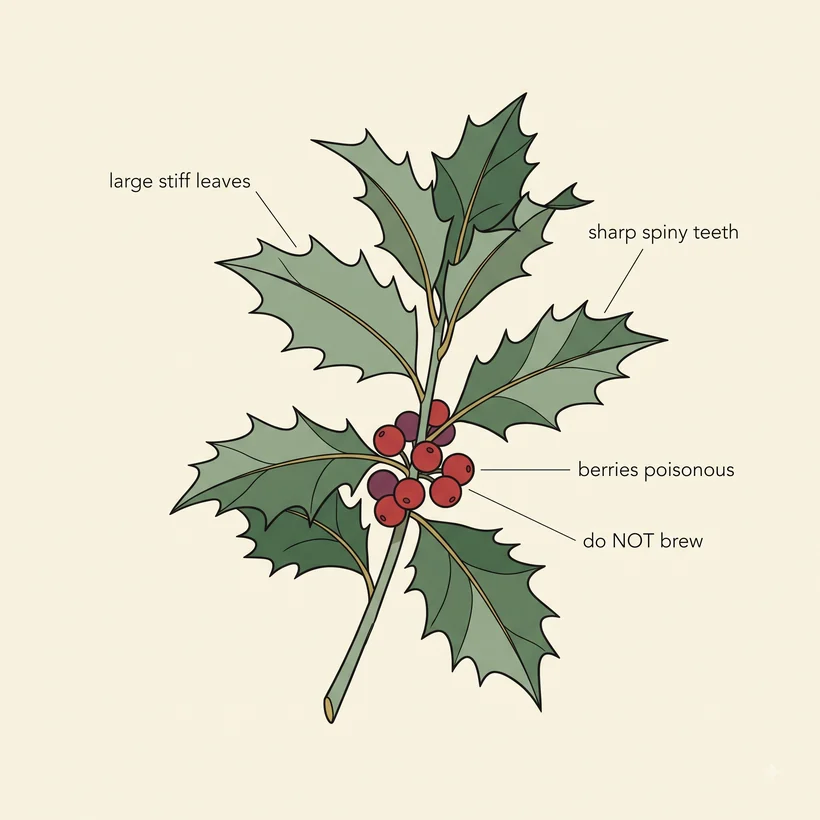
The tell: Brew yaupon leaves only — and remember every holly's berries are toxic.
D · Desert Willow vs. OleanderDEADLY
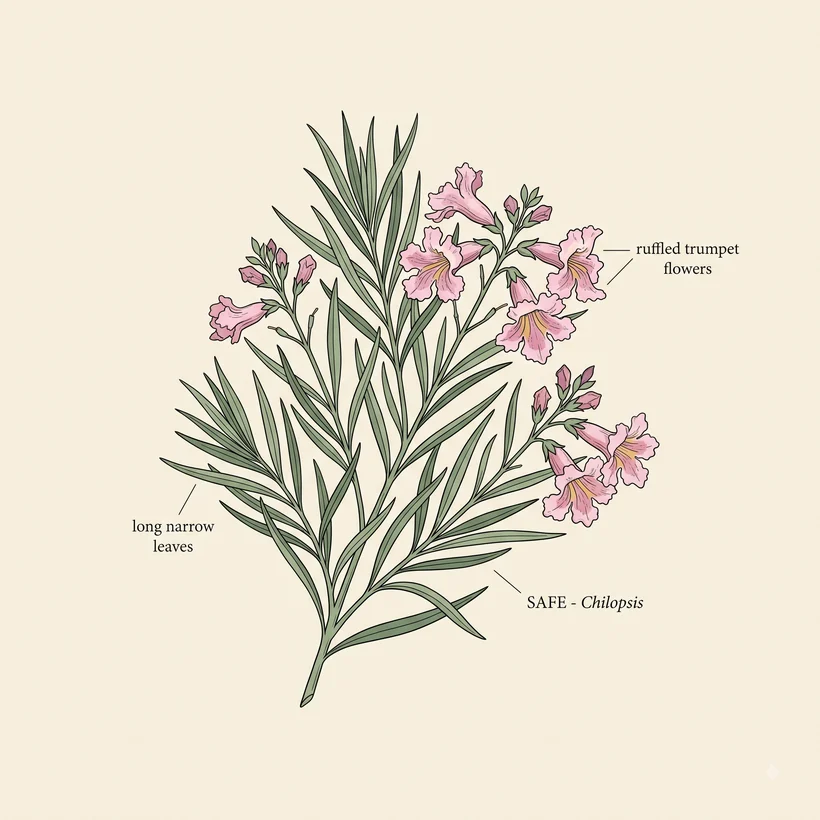
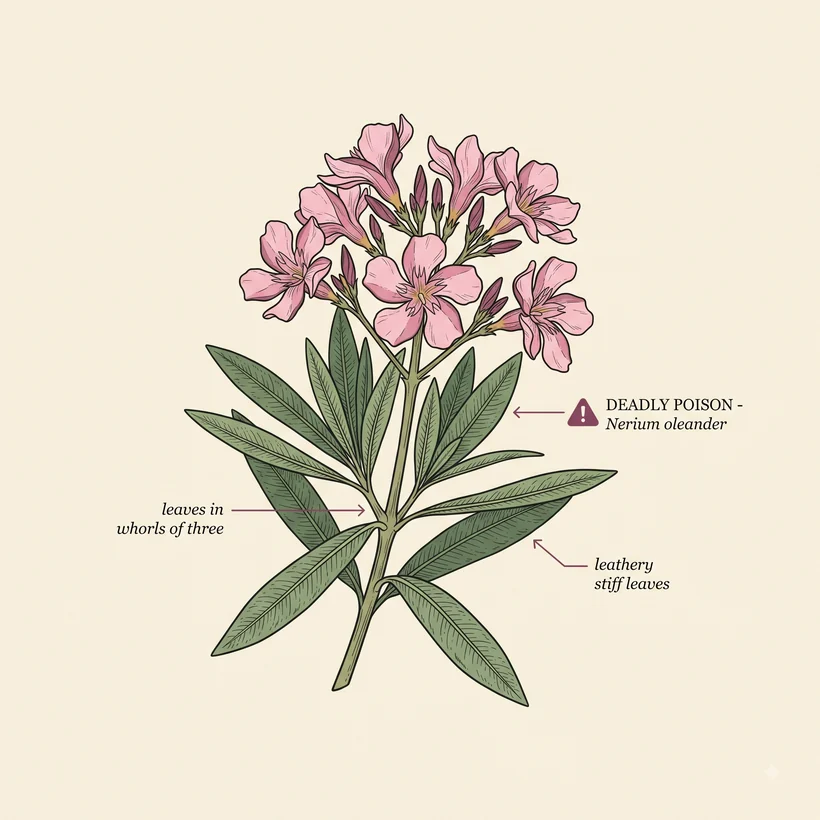
The tell: Whorls of three stiff leaves and flat flowers mean oleander — one of the most poisonous shrubs there is.
E · Hickory & Oak Nuts vs. BuckeyeTOXIC
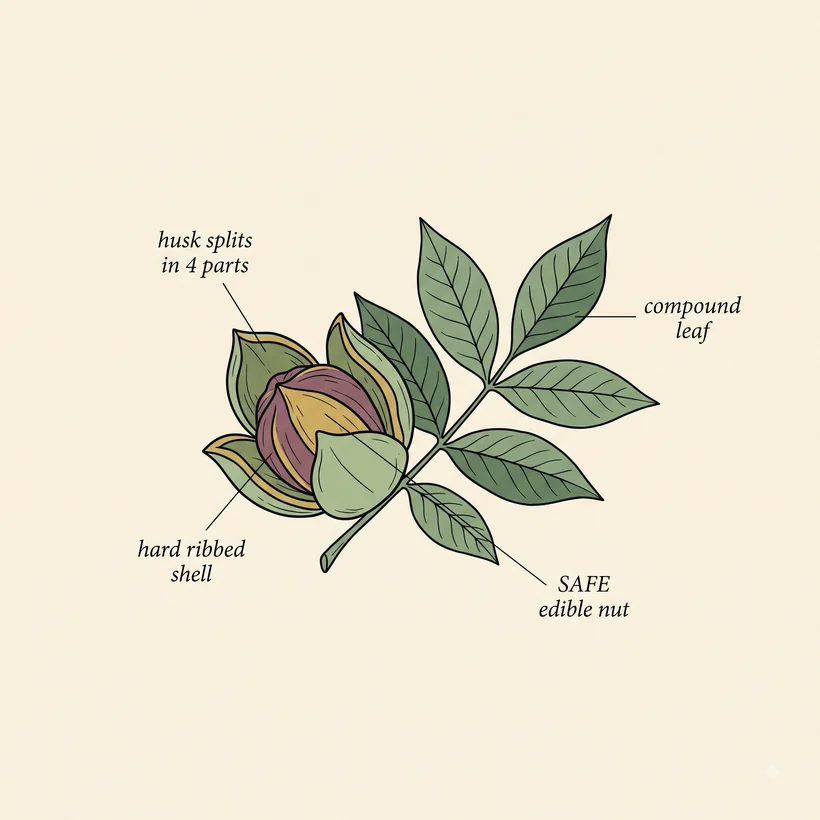
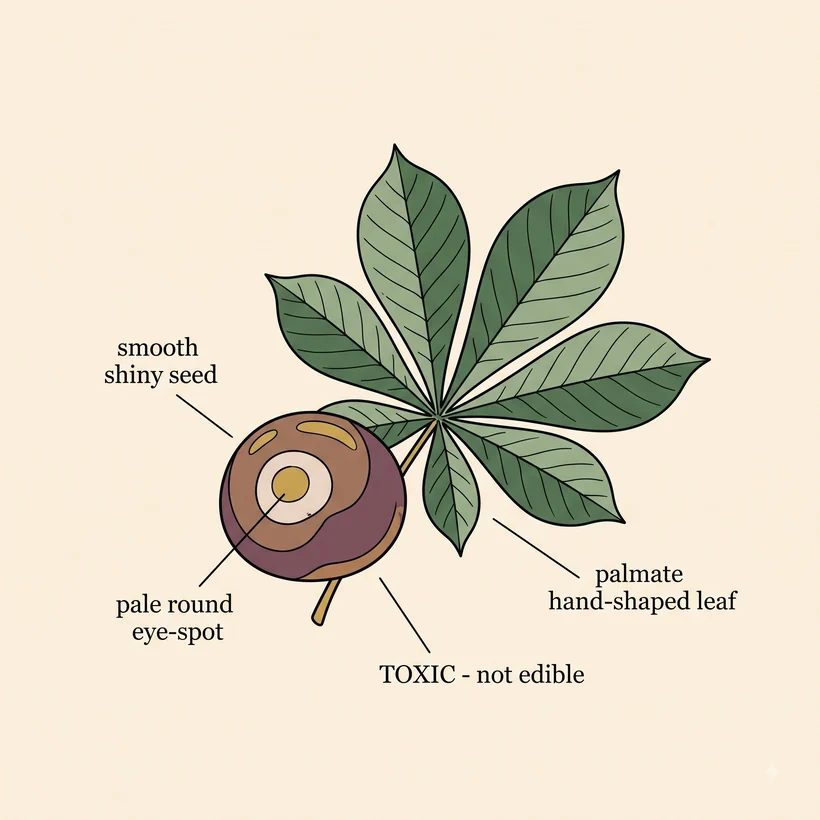
The tell: A glossy nut with a pale eye and a hand-shaped leaf is buckeye — not edible, even after leaching.
F · Tree Hemlock vs. Poison HemlockDEADLY
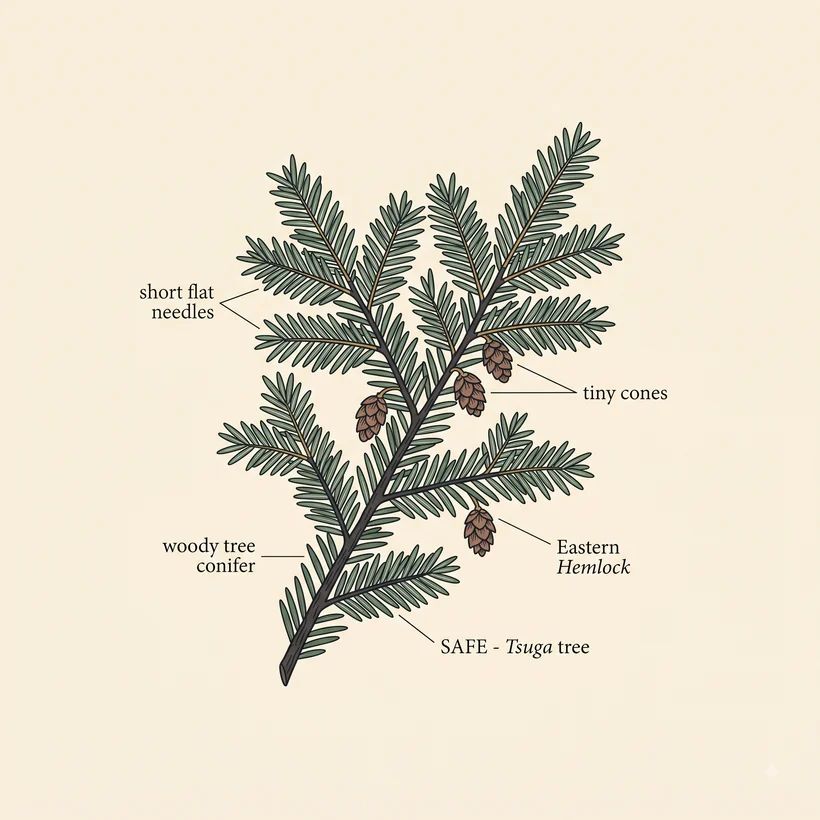
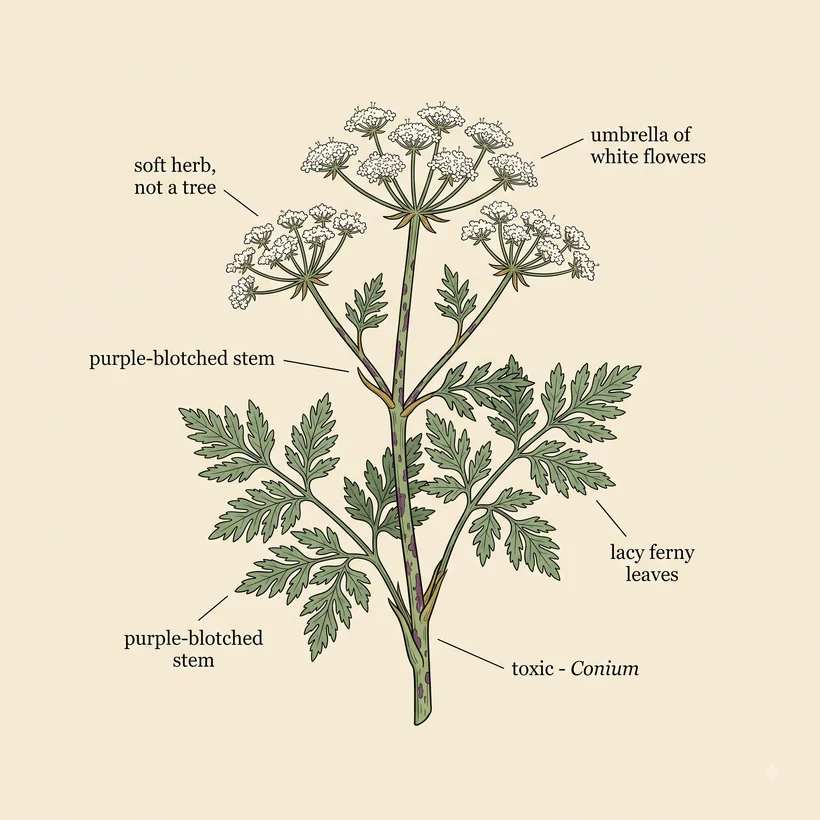
The tell: Same name, opposite fate — the tree is a conifer, the killer is a soft herb. If it isn't woody, walk away.